
Car mat materials: how do rubber, TPE, EVA and velour differ?

Car mats should look good, but their main job is to protect the floor from water, mud and sand. Which material works best? Here’s how rubber, TPE, EVA and velour compare in winter, in hot weather and under heavy use.
Car mat materials: what you need to know
- Rubber and TPE are non-absorbent, so they can be cleaned with water. Velour has a fibrous structure that can absorb moisture and usually needs gentler care, such as vacuuming or dry cleaning. Dirt can collect in the pores of EVA foam, which affects how you clean it.
- TPE stays flexible in cold and hot conditions. Cheaper rubber compounds can stiffen or deform as temperatures change with the seasons.
- Even the most durable material cannot protect the floor properly if the mat does not fit the car. Before buying, check the generation, year, body style and location of the factory fixings.
Choosing a car mat material: what are the options?
Car mats are available in rubber, velour, TPE and EVA. They differ in their resistance to water, dirt and temperature. Mats made for a specific car cover the floor better and stay in place more securely while you drive.
Traditional rubber: protection against mud and water
Rubber keeps moisture off the carpet. It is a good choice for autumn and winter driving. Rubber mats catch mud, snow and road salt. Simply take them out and wash them with water.
Rubber mats such as the universal PURE design car mats are also heavier than mats made from other materials and have a more functional look.
Velour: an elegant, comfortable finish in dry weather
Want smart-looking mats that match the interior and are practical to use? Velour is a good option. It goes well with the upholstery and gives the cabin an elegant look.
Velour traps dust and sand, helping keep the car interior clean day to day. If the mats get very wet, moisture can soak into the fibres and take longer to dry. For heavier soiling, wet cleaning or washing works best. Velour mats such as Horizon car mats are particularly popular in spring and summer when most dirt is dry.
Modern TPE: flexibility and a premium fit
TPE stands for thermoplastic elastomer. It has the flexibility of rubber and can be moulded precisely. Mats made from TPE can closely cover the floor, sills and centre tunnel.
TPE does not absorb water, stays flexible in cold weather and copes well with high temperatures. It does not give off a strong smell. It is easy to clean and lighter than traditional rubber. Find the best TPE car mats for your car here.

EVA foam: lightweight with a distinctive cellular structure
EVA is a lightweight, closed-cell material. Distinctive diamond-shaped or honeycomb cells collect water, mud and sand. This helps stop dirt spreading across the whole surface.
EVA mats have a lightweight foam construction and a distinctive cellular structure. They differ from conventional rubber, TPE and velour mats in how you use and care for them. Choose a material that suits your preferences and how you use the car.
Buyer’s guide: how to choose car mats
1. Material
Rubber, TPE, EVA and velour are the most common options. Choose rubber if you want affordable protection against water and mud. TPE suits drivers who want durability, temperature resistance and easy cleaning. EVA makes sense if you value a light mat you can clean quickly. Choose velour if the appearance of the interior matters most.
2. Resistance to water and mud
Check the height of the edges. A good mat has raised edges to contain water, melted snow and mud. With EVA mats, look at the depth of the cells. Deeper cells can hold more dirt.
3. Ease of cleaning
Rubber and TPE can be rinsed quickly with water. Shake out or rinse EVA mats to remove debris. Velour stays looking good if you clean it periodically using a method suited to the type of dirt. Also check the surface texture. Deeper grooves trap dirt and moisture more effectively and offer the floor better protection.
4. Durability and wear resistance
Look closely at the area beneath the driver’s heel. Check the thickness and look for extra reinforcement. On velour mats, check pile weight and edge stitching. Rubber and TPE should be flexible and return quickly to their original shape after bending.
5. Temperature resistance
Which mats should you choose if the car is often parked outside? Look for a material that stays flexible in freezing conditions and keeps its shape in the heat. A deformed mat can lift away from the floor or shift underfoot.
Which mats are right for your car?
Even a durable material provides poor protection if the mats do not fit the car floor. A mat that is too small leaves carpet exposed. One that is too large can curl up, slide or obstruct the pedals. Before buying, check:
- the make and model,
- the generation,
- the year,
- the body style,
- the drivetrain,
- the gearbox,
- the number of seats,
- the production years shown in the product description,
- the location of the factory fixings,
- the exact version using the VIN if you are unsure.
A new generation or facelift can change the shape of the floor and the position of the clips. For example, the Race Rock 2-in-1 set for the 2016–2024 Volkswagen Tiguan II may not fit the next version. Once you identify your car, compare the ranges by material, edge height, surface design and ease of cleaning.
When your order arrives, place all the mats in the car. Check that they sit flat, stay clear of the seat runners and do not curl up by the sills. Move the front seats forwards and backwards. Make sure the runners do not touch the edges of the mats.
Secure the driver’s mat, then fully depress the accelerator, brake and clutch. The mat must stay clear of the pedals and allow them to move freely.
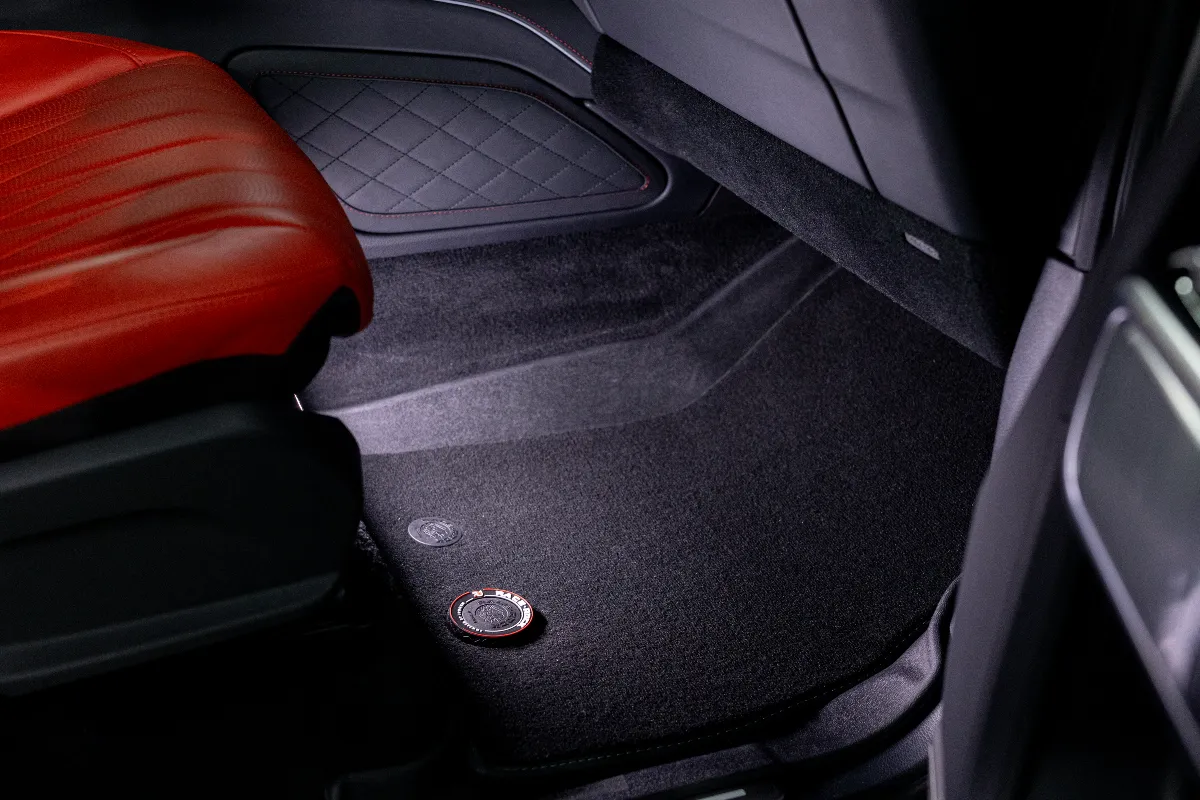
Car mat materials: summary
You now know how the different materials perform. Rubber protects against water and mud, TPE offers durability and a precise fit, EVA is light and easy to clean, and velour has an elegant appearance. Choose according to how you use the car, the season and the comfort you want. If you want mats for year-round use, consider Race Rock 2-in-1 mats, which protect against moisture while giving the interior a smart finish.
Frequently asked questions
Can you swap rubber and TPE mats in the same car?
Both materials resist water and are easy to clean, but TPE mats are tailored to a specific car model and fit the floor more precisely. Universal rubber mats may not cover the sills and centre tunnel as closely as a tailored TPE set.
How can you tell whether an EVA mat has deep enough cells?
Look for the cell depth in the product description or in cross-section photos. The deeper the cells, the more water and mud they can hold before it overflows onto the carpet.
Do car mats affect driving safety?
A poorly fitting or improperly secured mat can slide under the pedals and restrict their movement. After fitting a new set, check that the driver’s mat is firmly secured and that the accelerator, brake and clutch move freely.
Does mat thickness matter when choosing a set?
Thickness affects cushioning, heel-area durability and the protective edge height. A very thick mat can foul the seat runners or make it difficult to close the doors, so check the manufacturer’s dimensions before buying.