Car mat safety

Car design has evolved many times in more than a century, and so have safety systems and driving habits. Today, road safety is a priority for manufacturers, lawmakers and drivers. Vehicle checks and updated regulations help make road use predictable and safer. One part of vehicle safety is easily overlooked: the driver’s footwell. This is the area in front of the driver’s seat, and it houses some of the most important controls in the vehicle: the pedals.
Pedals are out of sight and rarely get much attention. Neglecting the area around them can cause problems when you least expect it. They control acceleration and braking, after all. What can go wrong? The widely reported Toyota recall around 2010 showed how serious pedal interference can be. Accelerators became stuck in the open position, causing unintended acceleration and crashes. What can you do to keep the footwell safe?
Keep the cabin clean
A clean car makes for a more pleasant journey and can help make it safer. A loose object left in the cabin, such as an empty bottle, can roll under the brake pedal and stop you from pressing it. Keeping the cabin tidy helps prevent this.
Choose good-quality car mats
Floor mat interference was one issue in the Toyota recalls. The NHTSA investigation highlighted how a mat could slide forwards and trap the accelerator in the open position. A mat can also interfere with the brake pedal. That is why the right car mats matter. Safety depends on fit, compatibility with the original fixing system and slip-resistant properties.
To understand the fixings on car mats, consider both their design and how they affect safety. Mats protect the floor against dirt, wear and moisture. They also need to stay in place so they do not interfere with the driver’s control of the vehicle.
Designing a mat fixing system requires careful consideration of the materials, compatibility with each vehicle model and the durability and reliability of the mechanism. There are several ways to keep mats in place:
1. Retaining clips: These are among the most common fixings. Many cars have factory hooks or studs in the floor. Compatible mats have reinforced openings or clips that lock onto them. Clips and hooks are simple to use and help prevent the mat sliding forwards.
2. Hook-and-loop strips: Some mats have strips on the underside that grip the vehicle carpet. They make mats easy to remove and refit, which is useful when cleaning. Their grip can diminish as dirt accumulates or the strips wear.
3. Tailored mats: These follow the contours of a specific vehicle’s floor to minimise movement. A close fit helps keep the mat in position, though it does not replace a fixing system. Tailored mats often come with integrated retainers for extra stability.
4. Slip-resistant backing: Many mats have a rubberised or textured underside that grips the floor. This is simple, but can become less effective than other systems if the backing wears or the floor is especially smooth.
Car mats present a safety risk when they slide or curl under the driver’s feet and interfere with the pedals. This can cause a crash if the driver cannot operate the accelerator, brake or clutch as intended.
1. Correct fit: Check that your rubber car mats are the right size and shape for the vehicle so they cannot slide beneath the pedals. Mats tailored to the specific model are recommended for this reason.
2. Secure fixings: A mat fixed securely to the floor is less likely to slide or fold. Retaining clips are designed to hold it in its intended position, even with vigorous foot movement.
3. Regular inspections: Check the fixings regularly for signs of wear or damage. Even durable systems can fail over time. Spotting a problem early can prevent a dangerous situation. Routine cleaning is a good time to check.
4. Compatibility with the vehicle: Choose mats and fixings designed for the specific make and model to ensure the mat fits and the retaining system works. Check that any aftermarket solution meets the vehicle’s specifications.
5. Avoid stacking mats: Putting one mat on top of another can make the fixings less effective and increase the risk of movement.
FroGum offers high-quality products, including FroGum car mats made from our proprietary TPE for grip and durability over thousands of kilometres. High-resolution 3D laser scans provide a precise fit for specific car models. The model-specific fixing system addresses the safety factors outlined above. ProLine car mats and No.77 have raised edges that cover the floor and extend up the sides of the footwell, helping contain spills. The edges use Max Edge technology to resist deformation over years of use. The mats are easy to maintain. If your budget is tighter, take a look at traditional El Toro rubber mats, made from a durable, odourless rubber compound. These thick mats are suited to heavy use and have extra slip-resistant backing and openings for the fixings.
If you already use TPE car mats, look at ProLine and DryZone boot liners. Made from the same material, they offer the same high level of protection for the boot.
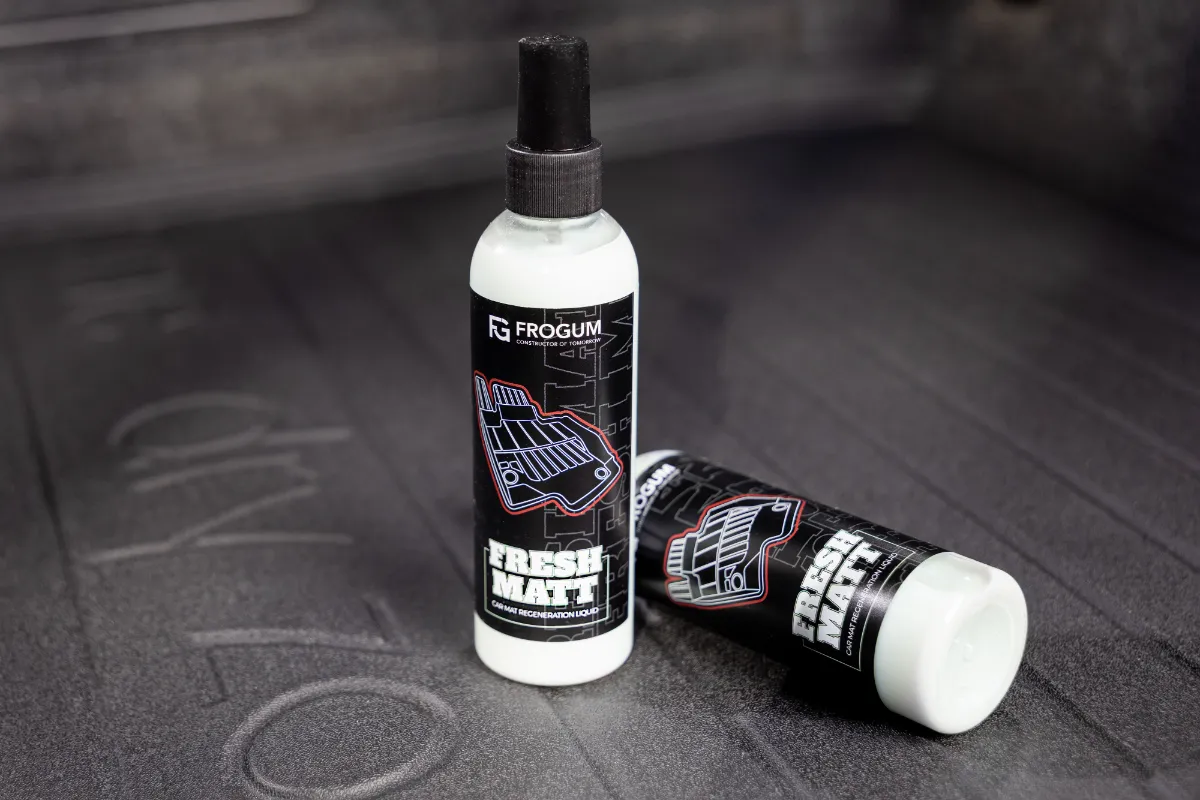
To refresh ProLine or No.77 mats and improve grip, explore FreshMatt, the mat care product developed with ADBL. It is designed for FroGum car mats and boot liners and refreshes their surface and colour, revives scratched areas and restores the original finish of TPE car mats and boot liners.