
Where to drive for mushroom picking: forest access rules and practical tips

Wondering where to drive to go mushroom picking so you can come home with a full basket without a fine or mud in the car? It pays to plan an autumn mushroom-picking trip. Find a suitable forest, check where you can park and get the car ready. Wet baskets, muddy boots and pine needles can quickly dirty the interior.
Driving to go mushroom picking: what you need to know
- Leave your car only in a signed car park or designated parking space. A forest road may be closed to traffic.
- Porcini grow near spruce, pine, oak and beech trees, while chanterelles are most often found in groups among moss and fallen conifer needles.
- Mud, moisture and needles can easily get into the car after mushroom picking. A boot liner and TPE car mats help protect the original carpet.
Driving out into the countryside: where should you go mushroom picking?
You do not have to travel hundreds of kilometres from home to find a good spot for mushrooms. Sometimes a larger woodland area just a few dozen kilometres from town, or even closer, is enough. Before setting off, check what other mushroom pickers have to say and make sure the forest is easy to reach legally.
Find a forest car park or a designated parking space in advance. The websites of individual forest districts are one place to look. That way, you do not have to work out when you arrive whether you can leave the car by the road.
Try to get to the forest early in the morning. It is easier to find a parking space, and in popular areas you have a better chance of finding mushrooms before other pickers get there.
Be prepared for dirt as well. Forest roads and paths can be damp even in good weather. You can carry sand, soil, needles and pieces of leaf back into the car. After rain, you can expect mud and water as well.
Protect the floor and the load area before you leave. If you go often, it is worth having a set of car mats and a boot liner. The dirt then lands on an easier-to-clean surface instead of on the original carpet.
Choosing the right woodland: where are mushrooms most often found?
No single type of woodland guarantees a full basket every time. Different mushroom species favour different habitats. Temperature, rainfall and the time of year all matter as well.
Porcini are often found near spruce, pine, oak and beech trees. Bay boletes are most common in coniferous and mixed woodland. They favour spots covered in moss and leaf litter.
It is also worth checking the weather over the previous few days. A warm spell after rain can encourage mushrooms to appear. One rainy day alone is no guarantee that the woods will be full of mushrooms the next morning.
After a successful trip there is a more practical problem. The basket may be wet, and its base may be covered in soil and forest litter. Avoid setting it straight onto the boot carpet.
A boot liner with raised edges works well here. It holds water and dirt on the liner itself. When you get home, you can take it out and wash it without having to clean the whole boot.
Moss and fallen needles: where do chanterelles grow?
Where do chanterelles grow? You can find them in both coniferous and deciduous woodland. They often grow among moss and in areas covered with fallen conifer needles. They usually grow in groups, so once you find one, look carefully around the immediate area.
Chanterelles favour damp conditions, though the ground need not be waterlogged. After rain can be a good time to look, while temperatures are still fairly warm.
A well-ventilated basket is best for the mushrooms you pick. After several hours of walking, however, the bottom of the basket is often wet and dirty. Boots, jackets and trousers can end up in the same state.
If you are driving, bring a container or large bag for wet things. Put your mushroom baskets in the protected boot. Soil is easier to remove from the liner than to wash out of the original carpet.
Rules and restrictions: can you drive into a forest?
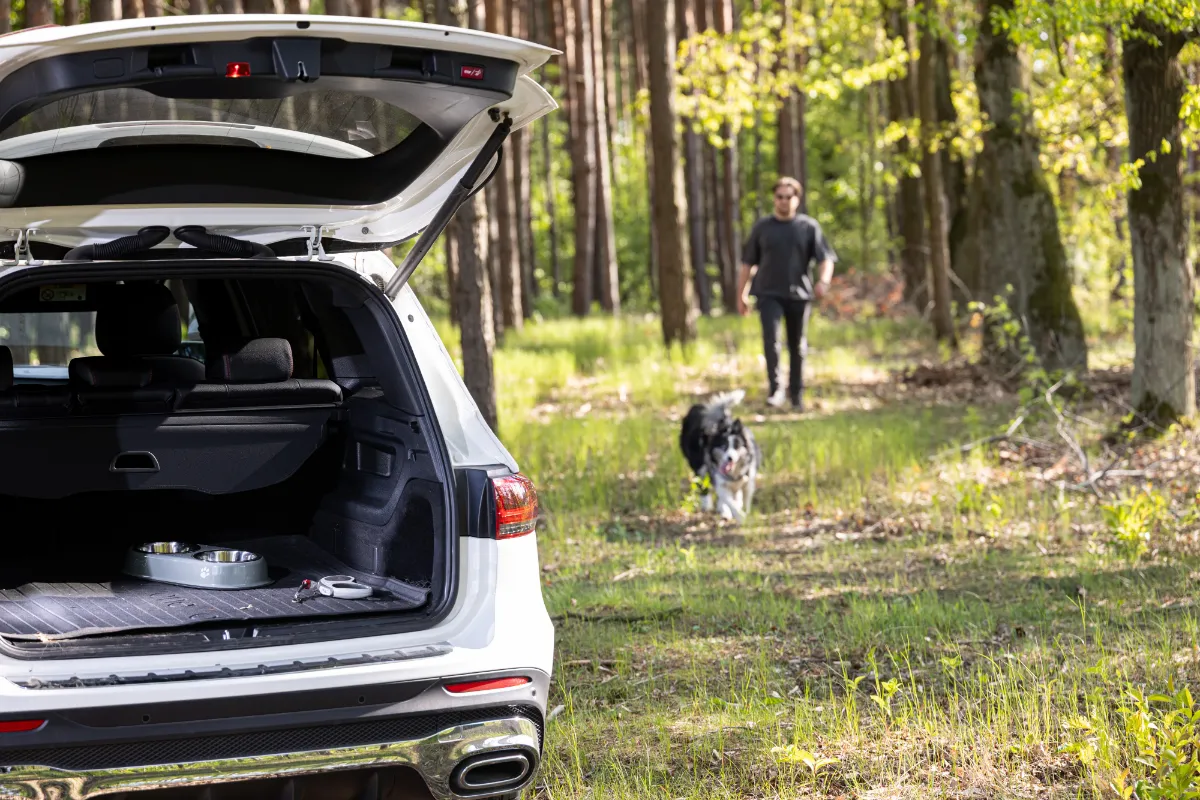
Can you drive into a forest? It depends on the road. Poland’s Forests Act sets out clear rules. You can drive on public roads. You can drive on a forest road only if signs indicate that it is open to traffic.
This has an important practical implication. A forest road does not have to display a no-entry sign or be blocked by a barrier. If it has not been opened to traffic, do not assume that driving on it is legal.
The safest option is to leave the car in a signed car park or designated parking space. Avoid parking in front of a barrier. A car left there may obstruct forestry vehicles or the emergency services.
The same applies to the verge of a forest road. Several other cars parked there do not make it a legal parking place.
You could be fined for driving in without authorisation or leaving a vehicle in a prohibited spot. Forest guards can stop a driver, check their identity and issue a fine. Take a few minutes to find an official car park before going mushroom picking.
Rights and restrictions: does a disabled parking permit allow you to drive into a forest to pick mushrooms?
A disabled parking permit does not automatically allow you to drive on every forest road. The Forests Act provides an exception for disabled people using vehicles adapted to their needs.
This exception does not give unrestricted access to forest roads. Temporary access restrictions may apply in forests. These can be introduced because of fire risk, forestry work or danger to the public.
Some parts of forests are permanently closed to the public. These include wildlife refuges, spring areas and certain forest plantations.
If you are unsure, check the information issued by the relevant forest district before you leave. This can help you avoid an unnecessary dispute when you arrive.
Finding a good haul: where are mushrooms appearing in your area?
Mushrooms can appear very quickly, so information from two weeks ago may already be of little use. Check recent reports from the area before setting off.
Check several sources:
- local mushroom-picking groups on social media,
- mushroom-picking forums and websites,
- information published by forest districts,
- rainfall maps for the past few days,
- temperature and humidity forecasts.
Check the weather from the past few days too. Whether it rains today is only part of the picture. A prolonged dry spell can considerably reduce your chances of finding a good haul. A few warmer days after rain often improve conditions.
You do not need to know the exact spot from the outset. Reports of mushrooms appearing in a particular district or larger area of woodland are usually enough to plan a trip.
If conditions are good, prepare for a plentiful haul. A few full baskets can bring a lot of moisture, soil and needles into the boot. Have a protective surface in place before you go.
Finding a good haul: where are mushrooms appearing in your area?
The journey back from the forest is harder on the car interior than the drive there. In the morning, you get in with clean shoes. A few hours later, you return with muddy soles, a wet jacket and a basket full of mushrooms.
The cabin floor and the boot are most exposed. The original carpet readily absorbs moisture. Small needles, sand and bits of forest litter are also hard to remove from the fabric afterwards.
In the cabin, you can use No.77 car mats. They are made from TPE. They are tailored to specific car models, and the distinctive surface texture helps retain dirt carried in on your footwear.
You can remove and wash the mats after your trip. That saves you from having to clean the car’s carpet straight away. This is especially useful in autumn, when every trip back to the car brings in more moisture and mud.
A tailored boot liner serves a similar purpose in the load area. Use it to hold baskets, wet wellies, jackets and the rest of your forest kit.
Liners with a raised edge are a practical option. Any water that runs off a wet basket or your boots stays on the liner. When you get home, simply lift it out and wash it thoroughly.
If you regularly go mushroom picking, choose a set that protects both the cabin and the boot. This makes cleaning up after the trip much easier. You can remove the dirt from a surface designed for the job without having to wash the original upholstery.
Driving to go mushroom picking: summary
Where should you drive to go mushroom picking? Choose somewhere you can reach legally and leave the car in a designated car park. Check information from the forest district, the weather and recent reports from other pickers before you go.
Prepare the car as well. Autumn mushroom picking means mud, water, sand and needles. Tailored car mats and a boot liner help keep most of it away from the original carpet. Once you get home, you can get on with cleaning the mushrooms rather than washing the car interior.
Frequently asked questions
How can you check whether access to a forest is restricted?
Forest districts publish information about temporary closures on their websites and social media. You can also contact the relevant forest district directly.
How can you get moisture out of the car after an autumn outing?
When you get home, take out the car mats and boot liner and let them dry. Air the car with the doors open. You can also reduce excess moisture by running the air conditioning, which dries the air in the cabin, or by leaving a moisture absorber in the car overnight.
Can you carry mushrooms in a plastic bag?
No. Mushrooms quickly build up condensation and spoil in a sealed bag. A well-ventilated basket or a mesh bag is better for transport. In the car, place it on a protective liner.